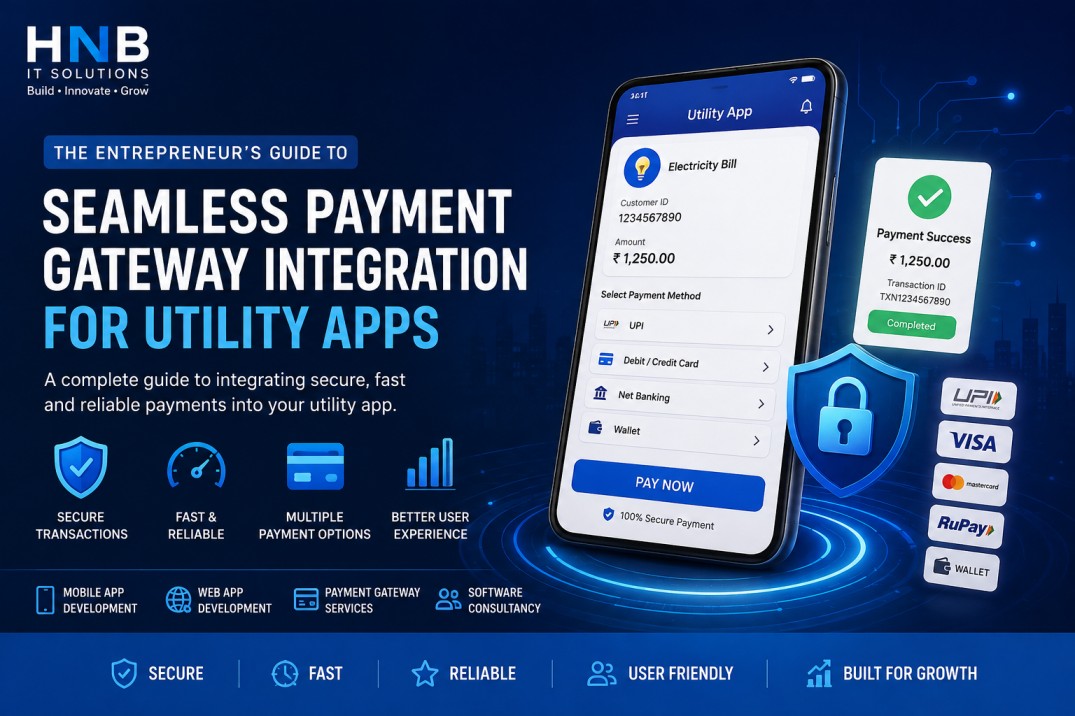
The Entrepreneur’s Guide to Seamless Payment Gateway Integration for Utility Apps
Today, utility apps are becoming an important part of everyday digital life. From electricity bill payments and mobile recharges to subscription services, ticket booking and other online services, users want everything to be available inside one simple application.
But there is one important part that can make or break the user experience — payments.
If users have to leave an app, wait for a payment page to load, or deal with confusing payment options, they may simply stop the transaction. This is why Payment Gateway Integration has become an important part of modern utility app development.
For entrepreneurs, integrating payments is not only about allowing customers to pay. It is about creating a payment experience that is fast, secure, reliable and easy to use.
In this guide, we will explain how entrepreneurs can approach payment gateway integration for utility apps, what features they should consider, and how to build a better payment experience for their users.
What Is Payment Gateway Integration?
Payment Gateway Integration is the process of connecting a payment service with your mobile application, web application, or website so users can make digital payments directly through your platform.
A properly integrated payment system can allow users to pay using different methods such as:
- UPI
- Debit and credit cards
- Net banking
- Mobile wallets
- Other supported digital payment methods
The exact payment methods available depend on the payment provider and the business setup.
For a utility app, payment integration can be connected with different services. For example, a user may recharge their mobile number, pay an electricity bill, purchase a subscription, or pay for another service without leaving the application.
This creates a much smoother customer journey.
Why Payment Gateway Integration Matters for Utility Apps
Imagine a user opens your utility application to pay a bill.
They select the service, enter their details, confirm the amount and click on Pay Now. If the payment process is simple and quick, the transaction can be completed within a short time.
Now imagine the opposite.
The payment page takes too long to load, the user is redirected multiple times, or the available payment method does not work.
There is a good chance the user will leave.
That's why payment experience should be treated as an important part of the overall app design.
Key benefits include:
1. Better User Experience
Users can complete payments without unnecessary steps.
2. Faster Transactions
A well-designed integration can reduce unnecessary redirects and make the checkout process smoother.
3. Multiple Payment Options
Giving customers multiple supported payment methods can make it easier for them to complete transactions.
4. Automated Transaction Updates
Payment APIs can help your application receive transaction status updates and automatically update the user's account.
5. Improved Business Operations
Automation reduces the need for manually checking every transaction.
Common Utility Apps That Need Payment Integration
Payment gateway integration isn't limited to one particular type of application.
Many utility-based applications can benefit from integrated payments.
Some examples include:
- Mobile recharge applications
- Electricity bill payment apps
- DTH recharge apps
- Broadband payment apps
- Subscription applications
- Ticket booking applications
- Utility service marketplaces
- E-commerce utility platforms
- SaaS applications
- Service booking apps
- Digital service platforms
The payment workflow can be customized depending on the purpose of the application.
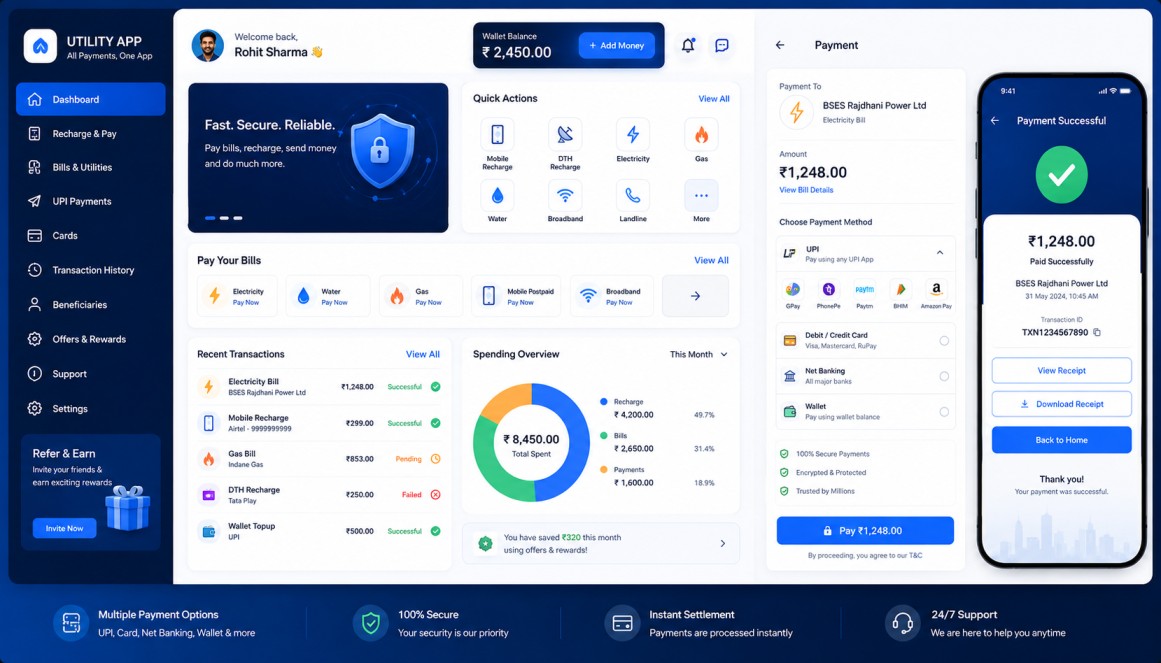
How Does Payment Gateway Integration Work?
Understanding the basic workflow can help entrepreneurs make better technology decisions.
A typical payment flow looks something like this:
User → Utility App → Payment Gateway → Bank/Payment Network → Payment Confirmation → Utility App
Here is a simplified process.
Step 1: User Selects a Service
The customer chooses the service they want to purchase or pay for.
For example, they may select an electricity bill and enter the required customer information.
Step 2: Payment Amount Is Generated
The application calculates or receives the amount that needs to be paid.
Step 3: User Selects Payment Method
The user selects one of the supported payment options.
Step 4: Payment Request Is Sent
The application securely communicates with the payment gateway through APIs or an SDK.
Step 5: Payment Is Processed
The payment provider processes the transaction through the selected payment method.
Step 6: Transaction Status Is Returned
The system receives a success, failure, pending, or other applicable transaction status.
Step 7: Application Updates the User
The app updates the transaction history and displays the appropriate status to the customer.
This automated workflow helps reduce manual work and provides users with immediate feedback.
Important Features to Consider Before Integration
Entrepreneurs should not select a payment solution only because it offers a low integration cost.
There are several technical and business factors to consider.
1. Multiple Payment Methods
Your customers may prefer different payment options.
Depending on your target market and provider, consider supporting methods such as UPI, cards and net banking.
2. Payment Status Tracking
Your application should be able to identify whether a transaction is:
- Successful
- Failed
- Pending
- Cancelled
- Refunded, where applicable
Accurate status tracking is very important for utility apps because users need confirmation after making a payment.
3. Webhook Support
Webhooks can help your application automatically receive updates from the payment provider.
For example, if a payment status changes after the initial request, the payment provider can send a notification to your backend.
This reduces the need for constantly checking the payment status manually.
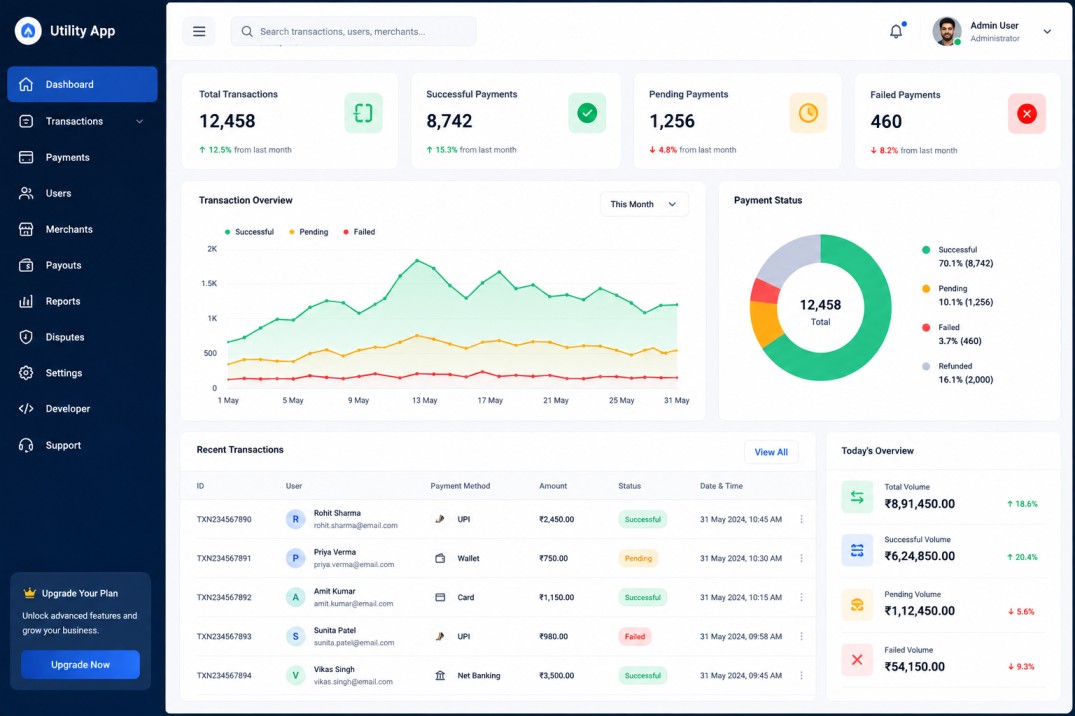
4. Transaction History
A good utility app should provide users with a clear transaction history.
Users should be able to check information such as:
- Transaction date
- Amount
- Service
- Transaction ID
- Payment status
This can also make customer support easier.
5. Refund Management
Refunds can become an important part of any payment-based application.
Your system should be designed to handle applicable refunds and display the correct transaction status to customers.
The exact refund process depends on the payment provider and transaction type.
Security Should Be a Top Priority
When dealing with online payments, security should never be treated as an optional feature.
A payment-enabled application handles sensitive transaction information, so entrepreneurs should work with established payment providers and follow applicable security requirements.
Some important areas include:
Secure API Communication
Communication between your app, backend and payment provider should use secure connections.
Authentication
API credentials and authentication keys should be handled securely on the server side.
Data Protection
Sensitive information should not be unnecessarily stored inside the mobile application.
Server-Side Verification
Payment status should be verified through trusted server-side mechanisms rather than relying only on information received from the client application.
Access Control
Admin panels should have appropriate authentication and role-based access so only authorized users can access transaction information.
Security requirements can vary depending on the payment provider, business model and applicable regulations, so professional technical and compliance guidance is recommended.
Mobile App vs Web App Payment Integration
Entrepreneurs often ask whether payment integration is different for mobile apps and websites.
The basic concept is similar, but implementation can vary.
Mobile App
For Android and iOS applications, developers may use a payment provider's SDK, hosted checkout or API-based approach depending on the provider.
The goal is to provide a smooth payment experience without compromising security.
Web Application
For websites and web applications, payment integration can be implemented through APIs, hosted checkout pages or provider-specific integrations.
A responsive checkout experience is especially important because customers may access the website from mobile phones, tablets or desktops.
The Role of APIs in Payment Integration
APIs are one of the most important technical components behind modern payment systems.
A payment API allows your application to communicate with the payment provider.
For example, your backend may send information about:
- Order ID
- Amount
- Customer details
- Callback information
- Payment method
The payment provider processes the request and returns the required response.
Developers can then use that information to update the application.
This is one reason why choosing an experienced software development company can be useful when building a payment-enabled utility application.
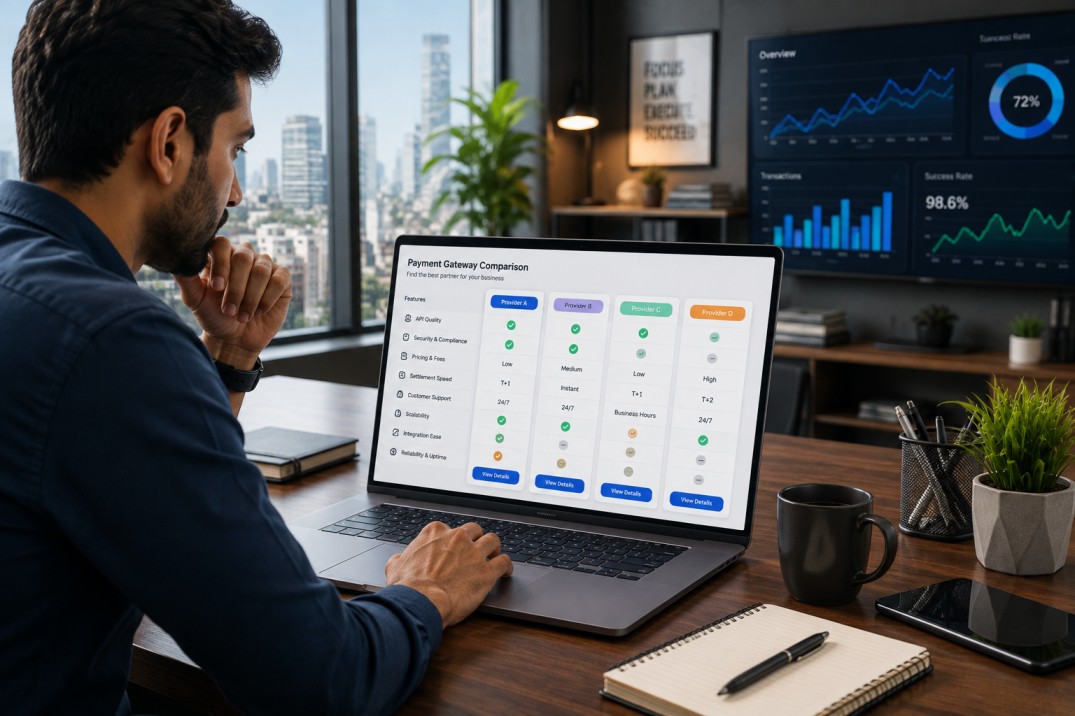
How Entrepreneurs Can Choose the Right Payment Provider
There are many payment providers available, but the best option depends on your application's requirements.
Before selecting a provider, compare factors such as:
| Factor | What to Check |
|---|---|
| Payment Methods | UPI, cards, net banking and supported options |
| API Quality | Documentation and developer experience |
| Security | Authentication and security standards |
| Settlement | Settlement process and timelines |
| Reliability | Payment success and system availability |
| Support | Technical and merchant support |
| Refunds | Refund and dispute handling |
| Reporting | Transaction and settlement reports |
| Pricing | Setup, transaction and other applicable charges |
| Scalability | Ability to handle growing transaction volumes |
Don't select a provider only because it is cheap. Reliability and support can become much more important when your app starts handling larger transaction volumes.
Common Mistakes Entrepreneurs Should Avoid
Payment integration looks simple from the outside, but poor implementation can create major problems.
Mistake 1: Choosing Only on Price
The cheapest option isn't always the best option.
Look at reliability, support, documentation and features as well.
Mistake 2: Ignoring Failed Payments
Your application should have a proper workflow for failed and pending transactions.
Users should not be left wondering whether their money was deducted or not.
Mistake 3: No Proper Transaction Logs
Maintain useful transaction records on the backend so your support team can investigate issues quickly.
Mistake 4: Poor Mobile Checkout
Most utility app users expect a quick mobile experience.
A complicated checkout can increase drop-offs.
Mistake 5: Not Planning for Scale
An application that handles 100 transactions today might need to handle thousands or more in the future.
Your backend architecture should be designed with scalability in mind.
How HNB IT Solutions Can Help With Utility App Development
At HNB IT Solutions, we help businesses turn software ideas into practical digital products.
Our development services cover multiple areas, including:
- AI Tools Development
- Mobile App Development
- Web App Development
- Payment Gateway Integration
- SMS & Bulk SMS Services
- Digital Marketing
- Software Consultancy
- SEO-Friendly Website Development
For businesses building utility applications, our team can help plan the application structure, user interface, backend system, admin panel and required third-party integrations.
We can also develop a website along with the application and structure it with SEO in mind so the business has a stronger digital presence.
A secure architecture, scalable backend and clean user experience can make a big difference when your application starts getting real users.

Final Thoughts
For entrepreneurs, Payment Gateway Integration for Utility Apps is much more than simply adding a "Pay Now" button.
A successful payment system should be secure, reliable, easy to use and properly connected with your application's backend.
From payment APIs and transaction tracking to webhooks, refunds and security, every part of the payment workflow matters.
If you are planning to launch a utility app, it is better to think about payment architecture during the early development stage instead of trying to add everything at the last moment.
With the right technology partner, you can build a utility application that offers a smooth customer experience while giving your business the technical foundation needed to grow.
HNB IT Solutions provides software development, mobile app development, web development, AI tools development, payment integration and digital marketing services for businesses looking to build and grow their digital products.
Frequently Asked Questions (FAQs)
1. What is Payment Gateway Integration?
Payment Gateway Integration connects a payment service with a mobile app, website or web application so customers can make digital payments securely.
2. Why do utility apps need payment integration?
Utility apps often provide services that require online payments, such as recharges, bills, subscriptions and bookings. Integrated payments make these transactions more convenient.
3. Can payment gateways be integrated into mobile apps?
Yes. Payment providers can offer APIs, SDKs, hosted checkout or other integration methods that developers can use depending on the platform and provider.
4. Is Payment Gateway Integration secure?
Security depends on the payment provider, implementation and application architecture. Businesses should use trusted providers and follow recommended security and compliance practices.
5. How long does payment integration take?
The timeline depends on the payment provider, application architecture, required features and testing requirements. A basic integration may be relatively quick, while a customized payment workflow can take longer.
6. Can I integrate payments into both my website and mobile app?
Yes. A business can build payment functionality for both mobile applications and websites, typically using the payment provider's supported APIs or integration methods.
7. What is a payment webhook?
A webhook is a server-to-server notification that can inform your application when a payment event or status changes.
8. Can HNB IT Solutions develop a complete utility app?
Yes. HNB IT Solutions provides mobile app development, web development, backend development, payment gateway integration, AI tools development, digital marketing and software consultancy services.