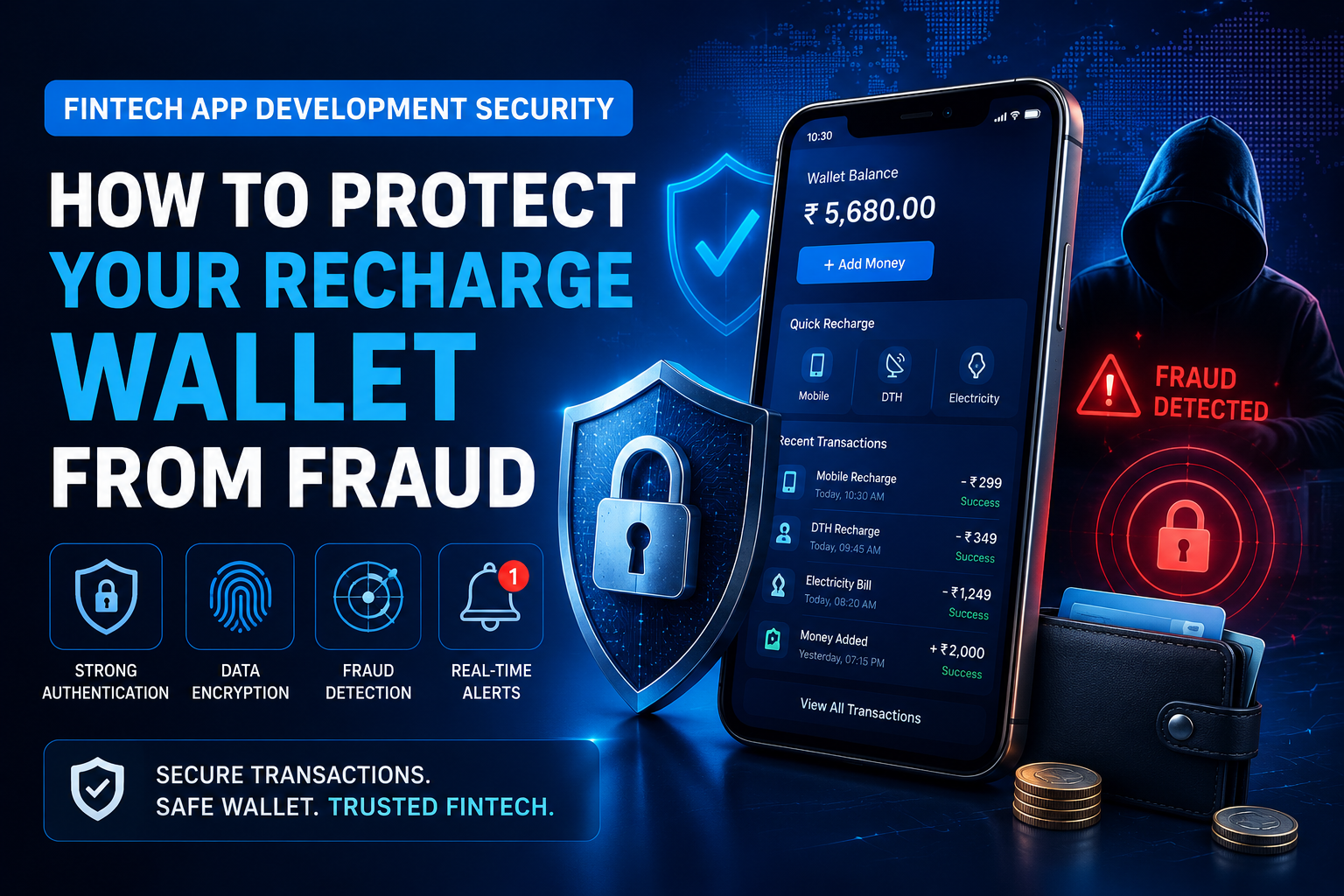
Fintech App Development Security: How to Protect Your Recharge Wallet from Fraud
If you run a recharge or wallet business, you already know the drill — one bad security incident and years of customer trust can disappear overnight. Fintech apps handle real money, real customer data, and real risk, and that's exactly why fraudsters keep targeting them. Whether it's a mobile recharge platform, a bulk SMS wallet, or a full-fledged digital payment app, security isn't a "nice to have" feature anymore. It's the foundation everything else is built on.
At HNB IT Solutions, a fintech app development company based in Delhi, India, we've worked closely with recharge and wallet businesses to understand where the actual weak points are — and more importantly, how to fix them before they turn into a headline. In this article, we'll walk you through the most common fraud tactics targeting recharge wallets today, and the practical steps you can take to keep your app (and your users) safe.
Why Recharge Wallets Are a Common Fraud Target
Recharge wallets sit at a strange intersection — they move money fast, often in small amounts, and users expect instant transactions. That combination is exactly what fraudsters love. Small, frequent transactions are easier to hide inside normal usage patterns, and instant settlement means there's often very little time to catch something before the damage is done.
A few reasons recharge wallets get targeted more than people expect:
- Low transaction values make fraud harder to notice quickly
- High transaction volume gives fraudsters cover to blend in
- Many users still reuse weak passwords across apps
- Some wallets skip proper OTP or device-based verification to keep onboarding "quick"
- Third-party APIs (recharge providers, payment gateways) can become weak links if not secured properly
The truth is, most fraud doesn't happen because of some genius hacker breaking through military-grade encryption. It happens because of small gaps — a missing verification step here, an unencrypted API call there.
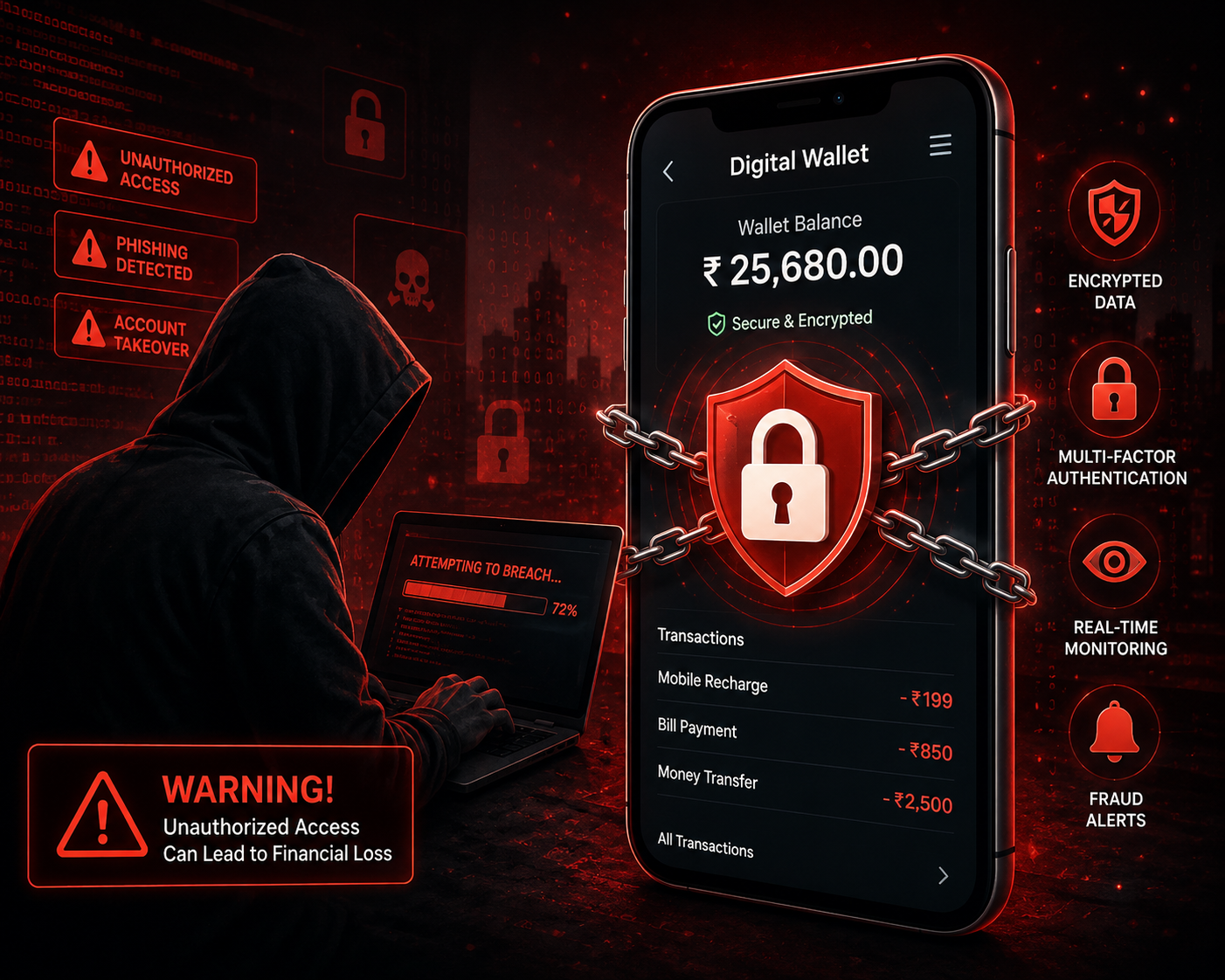
Common Types of Recharge Wallet Fraud
Before we get into protection, it helps to know what you're actually protecting against. Here are the fraud patterns we see most often in recharge and wallet apps:
1. Account Takeover Fraud
Fraudsters gain access to a user's account, usually through leaked credentials or weak passwords, and drain the wallet balance or misuse saved payment methods.
2. Fake Recharge / Refund Scams
Some users exploit bugs in the recharge confirmation flow — claiming a recharge failed when it actually succeeded — to get duplicate refunds or credits.
3. Bot-Based Wallet Abuse
Automated bots sign up for multiple fake accounts to exploit referral bonuses, cashback offers, or promotional wallet credits.
4. Man-in-the-Middle (MITM) Attacks
If data between the app and server isn't properly encrypted, attackers can intercept sensitive information like OTPs or payment details during transmission.
5. Payment Gateway Manipulation
Weaknesses in how the app communicates with the payment gateway can be exploited to alter transaction amounts or bypass payment verification entirely.
How to Protect Your Recharge Wallet from Fraud
Now for the part that actually matters — what you can do about it. These are the security practices we build into every fintech and wallet app at HNB IT Solutions.
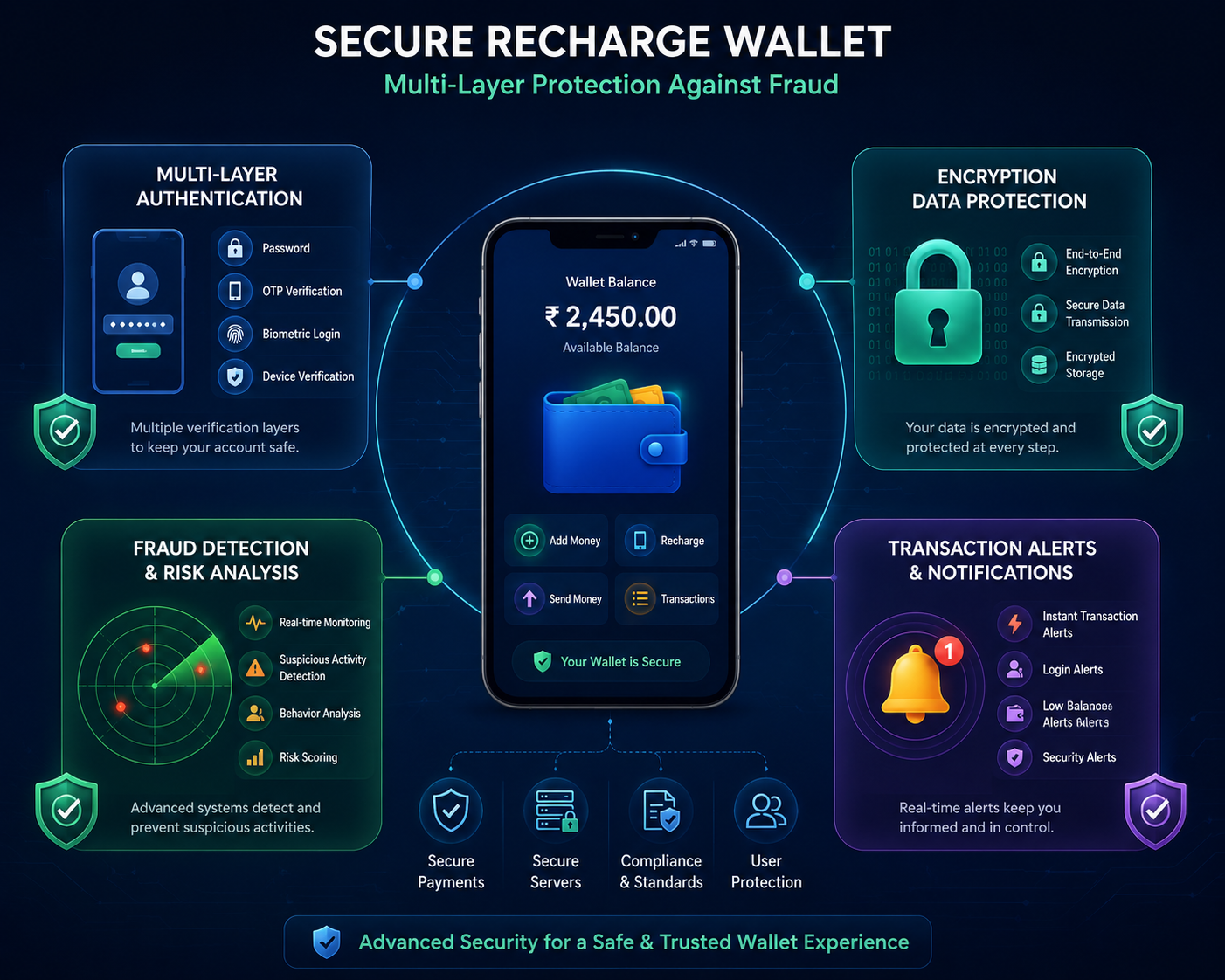
1. Multi-Layer Authentication
Don't rely on just a password. Combine OTP verification, device fingerprinting, and where possible, biometric login (fingerprint or face unlock). This alone stops a huge chunk of account takeover attempts.
2. End-to-End Encryption
Every piece of sensitive data — login credentials, OTPs, transaction details — should be encrypted both at rest and in transit. SSL/TLS protocols are the bare minimum here, not the finish line.
3. Secure Payment Gateway Integration
Work only with PCI-DSS compliant payment gateways, and make sure your app never stores raw card or bank details on its own servers. Tokenization should handle that instead.
4. Real-Time Fraud Detection
Set up systems that flag unusual behavior automatically — a sudden spike in recharge requests, multiple failed login attempts, or transactions from an unfamiliar device or location.
5. Rate Limiting and Bot Protection
Add CAPTCHA verification and request throttling on sensitive actions like login, OTP requests, and recharge submissions, so bots can't spam your system.
6. Regular Security Audits
Fraud tactics evolve constantly, so your app's defenses need to evolve too. Periodic penetration testing and code audits help catch vulnerabilities before someone else finds them first.
7. Transaction Limits and Alerts
Set daily or per-transaction limits, and send instant notifications for every wallet activity. A user who gets an SMS the moment something unusual happens can report fraud in minutes instead of days.
Role of AI in Fintech Fraud Prevention
This is where things are heading fast, and honestly, it's one of the more exciting parts of building fintech apps today. AI-driven fraud detection systems can analyze thousands of transactions per second, learning normal user behavior and instantly flagging anything that looks off — a login from a new location, an unusually large recharge amount, or repeated failed attempts within seconds of each other.
At HNB IT Solutions, our AI Tools Development team builds these kinds of smart detection layers directly into wallet and recharge apps, so fraud gets caught in real time, not after the money's already gone.
Why Choose a Professional Fintech App Development Company
Building a recharge or wallet app isn't just about a clean UI and fast checkout — the security architecture underneath has to be right from day one. Retrofitting security into an app that's already live is far harder (and riskier) than building it in from the start.
As a fintech app development company in Delhi, India, HNB IT Solutions specializes in:
- AI Tools Development for smart fraud detection
- Mobile App Development for Android and iOS wallets
- Web App Development for admin and merchant dashboards
- Secure Payment Gateway Integration
- SMS & Bulk SMS Services for OTP and alerts
- Digital Marketing Services to grow your platform safely
- Software Consultancy for compliance and architecture planning
We also provide app domain name setup and SEO-friendly websites, so your platform isn't just secure — it's discoverable and ready to grow.

Frequently Asked Questions (FAQ)
1. What is fintech app development security? It's the set of practices, tools, and protocols used to protect financial apps — like recharge wallets and payment platforms — from fraud, data breaches, and unauthorized access. This includes encryption, authentication, secure APIs, and real-time fraud monitoring.
2. How can I tell if my recharge wallet app has been compromised? Common warning signs include sudden unexplained balance changes, login alerts from unknown devices or locations, unusual spikes in failed login attempts, and customer complaints about transactions they didn't make.
3. Is OTP verification enough to secure a wallet app? OTP is an important layer, but it shouldn't be the only one. Combining OTP with device fingerprinting, biometric login, and behavior-based fraud detection gives much stronger protection than OTP alone.
4. What is the role of AI in preventing wallet fraud? AI systems can analyze transaction patterns in real time and flag anything unusual — like a sudden large recharge or a login from a new location — often catching fraud within seconds, well before manual review ever could.
5. How much does it cost to build a secure fintech app? Costs vary depending on features, platform (Android, iOS, or both), and the level of security infrastructure required. It's best to get a custom quote based on your specific requirements — reach out to HNB IT Solutions for a free consultation.
6. Does HNB IT Solutions provide ongoing security support after the app is launched? Yes. We offer software consultancy and maintenance support, including periodic security audits, so your app stays protected as new fraud tactics emerge.
Final Thoughts
Fraud in recharge and wallet apps isn't going away — if anything, it's getting more sophisticated. But most of it is preventable with the right security foundation: strong authentication, proper encryption, smart fraud detection, and a development partner who actually understands fintech, not just app development in general.
If you're building or upgrading a recharge wallet app and want it done right from the ground up, HNB IT Solutions is here to help. We build apps that aren't just functional, but genuinely secure.
Visit us at hnbitsolutions.com to know more about our fintech and app development services.