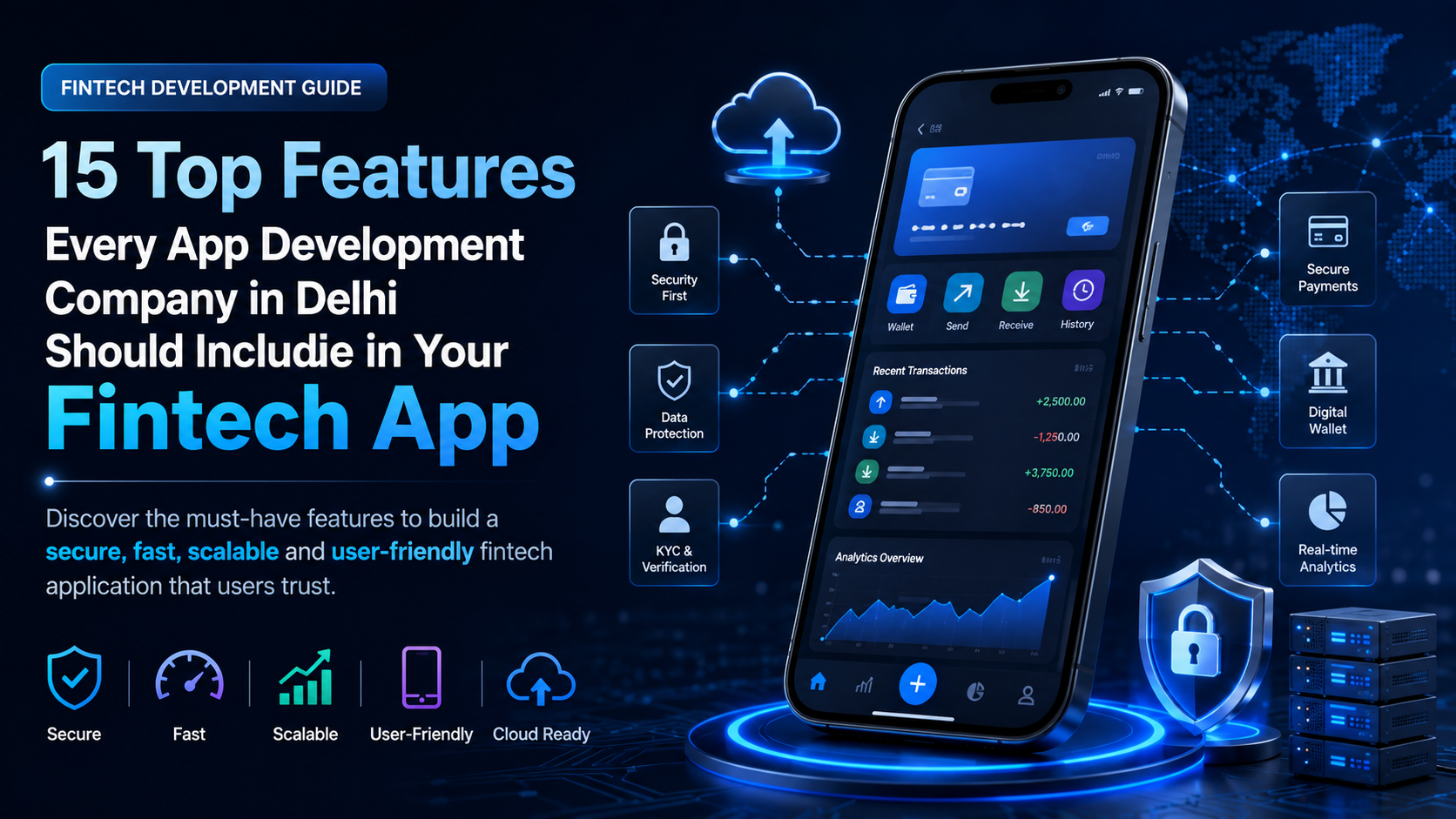
15 Top Features Every App Development Company in Delhi Should Include in Your Fintech App
The fintech industry is growing very fast in India. From digital wallets and payment apps to lending platforms, investment applications and recharge solutions, businesses are using technology to make financial services faster and easier.
But building a fintech app is not the same as building a normal mobile application.
When an app deals with money, payments and personal information, users expect much more than a good-looking interface. They want security, speed, transparency and a smooth experience every time they open the application.
This is where choosing the right App Development Company in Delhi becomes important.
A professional fintech development team should understand not only mobile app development but also payment integration, data security, APIs, cloud infrastructure, analytics and scalable software architecture.
In this guide, we will discuss 15 important Fintech App Features that should be considered before developing your fintech application.
What Makes a Fintech App Different?
A fintech application handles sensitive information such as user profiles, transaction details, payment information and sometimes financial records.

Because of this, the development process needs a security-first approach.
A fintech application should ideally be:
- Secure
- Fast
- Scalable
- Easy to use
- Reliable
- Mobile-friendly
- API-ready
- Easy to maintain
A good fintech app should also be prepared for future growth. You may start with 1,000 users, but the architecture should be capable of supporting much higher traffic later.
1. Secure User Registration & Login
The first important feature is secure authentication.
Users should be able to register and log in without unnecessary complexity. At the same time, the application needs to protect accounts from unauthorized access.
Common authentication options include:
- Mobile number and OTP
- Email verification
- Password login
- Two-factor authentication
- Biometric authentication
- Device verification
- Session management
For a financial application, authentication should not be treated as just a basic login screen.
The system should also monitor suspicious login attempts and provide additional verification when required.
2. KYC & User Verification
KYC, or Know Your Customer, is an important part of many fintech applications.
Depending on the business model and applicable requirements, your app may need a user verification process before certain financial services can be accessed.
A fintech application can include:
- User identity verification
- Document upload
- PAN/Aadhaar-related workflows where legally appropriate
- Selfie or face verification through approved providers
- Verification status tracking
- Manual verification for selected cases
The exact KYC requirements depend on the type of financial service and applicable regulations, so the development team should design this workflow around your business and compliance requirements.
3. Secure Payment Gateway Integration
Payment functionality is one of the most important Fintech App Features.
Your application should be able to connect with reliable payment providers through secure APIs.
Depending on the business model, you may need support for:
- UPI
- Debit and credit cards
- Net banking
- Wallets
- Payment links
- Automated refunds
- Transaction verification
- Payment status callbacks
A proper payment integration should also handle failed transactions and duplicate requests correctly.
For example, if a user completes a payment but the network becomes unstable, the application should not accidentally create two transactions.
This is one area where experienced fintech developers can save businesses from many problems later.
4. Digital Wallet & Balance Management
If your fintech application includes wallet functionality, users should be able to easily understand their available balance.
A wallet system may include:
- Add money
- Withdraw money
- Available balance
- Transaction history
- Pending transactions
- Failed transactions
- Refunds
- Wallet statements
The backend should maintain accurate transaction records so that the balance displayed to the user matches the actual transaction state.
Simple UI + accurate backend logic = better user trust.

5. Real-Time Transaction Tracking
Nobody wants to make a payment and keep wondering, “Payment hua ya nahi?”
Real-time transaction updates can solve this problem.
Users should be able to see statuses such as:
Success → Pending → Failed → Refunded
The app can also provide transaction IDs, timestamps and payment details.
This makes the application feel more professional and reduces unnecessary support queries.
6. Strong Fraud Detection & Security
Security should be one of the highest priorities in fintech app development.
A secure application can include multiple security layers such as:
- Encryption
- Secure API communication
- Token-based authentication
- Rate limiting
- Device monitoring
- Login alerts
- Suspicious activity detection
- Transaction monitoring
- Role-based access
- Secure database configuration
For larger fintech products, AI and machine learning can also be considered for identifying unusual transaction patterns.
For example, if a user's normal transaction behaviour suddenly changes, the system can flag the activity for additional verification.
7. AI-Powered Features
AI is becoming an important part of modern financial applications.
A fintech app can use AI for different purposes depending on its business model.
Examples include:
- AI customer support
- Financial insights
- Transaction categorization
- Fraud detection
- Personalized recommendations
- Spending analysis
- Automated document processing
- Smart notifications
The goal should not be to add AI just because it is trending.
The better approach is to identify a real user or business problem and then use AI where it can actually improve the product.
HNB IT Solutions also provides custom AI Tools Development, allowing AI functionality to be integrated into mobile and web applications.
8. Push Notifications & SMS Alerts
Financial apps need timely communication.
A good notification system can inform users about:
- Successful payments
- Failed payments
- Withdrawals
- Deposits
- Login attempts
- Password changes
- Account activity
- Promotional offers
You can use push notifications, SMS or other communication channels depending on the use case and applicable requirements.
For businesses managing large user bases, automated SMS & Bulk SMS Services can also be integrated into the overall communication system.
9. Detailed Transaction History
Users should never have to struggle to find an old transaction.
A well-designed transaction section should allow users to view:
- Date
- Amount
- Transaction ID
- Payment method
- Status
- Recipient/sender information where applicable
- Refund status
Adding search and filters makes the experience even better.
For example:
Filter → Successful Transactions → Last 30 Days
This small feature can make a big difference in usability.
10. Admin Dashboard
A fintech application needs more than just a user-facing mobile app.
The admin panel gives the business team control over the platform.
A good admin dashboard can include:
- User management
- KYC management
- Transaction monitoring
- Payment management
- Wallet management
- Reports
- Notifications
- Support tickets
- Revenue analytics
- Role management
- System settings
Admin access should also use proper role-based permissions.
For example, a customer support employee should not automatically have access to sensitive financial settings.
11. Analytics & Business Reports
Data helps businesses understand how their application is performing.
A fintech admin dashboard can provide reports for:
- Total transactions
- Daily/monthly revenue
- Active users
- New registrations
- Failed transactions
- Successful payments
- User retention
- Popular services
- Conversion rates
These insights can help business owners make better decisions instead of relying only on assumptions.
12. API Integration & Third-Party Services
A modern fintech application rarely works alone.
It may need to communicate with:
- Payment gateways
- KYC providers
- Banking APIs
- SMS providers
- Email services
- AI APIs
- Analytics platforms
- Cloud services
- CRM systems
Therefore, your App Development Company in Delhi should build the application with a flexible API architecture.
This makes it easier to add new services later without rebuilding the entire application.
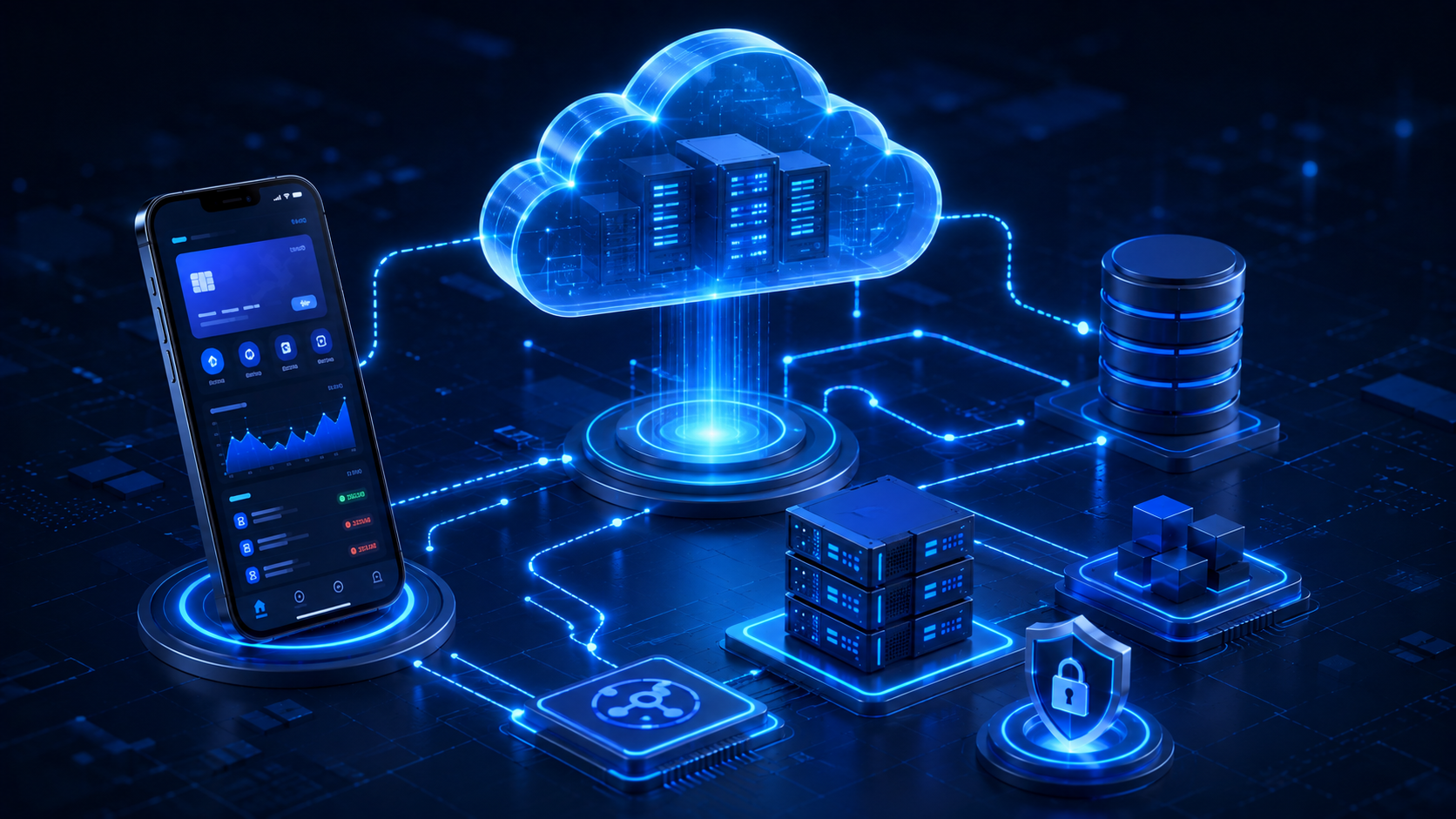
13. Scalable Cloud Infrastructure
Imagine your app has 2,000 users today.
After a successful marketing campaign, suddenly 50,000 users start using it.
If the backend is not designed for scale, the application can become slow or even unavailable.
A scalable architecture can help the application handle increasing:
- Users
- Transactions
- API requests
- Database operations
- Notifications
- Admin activity
Cloud infrastructure, caching, load balancing, database optimization and proper monitoring can all play an important role.
For fintech products, scalability should be considered from the beginning—not after the app starts crashing.
14. Clean UI/UX & Mobile-First Design
Security and backend architecture are important, but users still interact with the interface.
A fintech application should make important actions easy to understand.
For example:
Balance → Add Money → Send → Withdraw → Transactions
These actions should be easy to find.
Avoid filling the screen with too many buttons, popups and unnecessary information.
A clean interface builds confidence.
The app should also work smoothly across different screen sizes and devices.
15. SEO-Friendly Website Along With the App
One feature that many businesses overlook is the website.
A fintech app should not exist only inside the Play Store or App Store.
A professional SEO-friendly website can help people discover your business through Google.
Your website can include:
- Product information
- App features
- Pricing
- FAQs
- Blog
- Contact information
- Download links
- Support pages
- Privacy policy
- Terms & conditions
The website can also become an important part of your digital marketing strategy.
This is why an experienced development partner can provide both the app + domain + SEO-friendly website, instead of treating them as completely separate projects.
Bonus: Customer Support & Help Center
Another useful feature for fintech applications is an in-app support system.
Users may have questions about payments, withdrawals, verification or failed transactions.
You can provide:
- FAQs
- Support tickets
- Live chat
- Contact support
- Chatbot
- Ticket status
- Help articles
Adding support directly inside the app can reduce frustration and improve customer experience.
Why Security Matters So Much in Fintech Apps
A fintech application deals with sensitive data and financial transactions, so security cannot be an afterthought.
Before launching your application, your development team should think about:
Data Security
Sensitive information should be properly protected during storage and transmission.
API Security
APIs should use proper authentication, authorization and validation.
Access Control
Different employees should have different permissions.
Monitoring
Important system and transaction events should be monitored.
Backup & Recovery
A reliable backup strategy can help reduce the impact of unexpected failures.
Regular Updates
Security patches and software updates should be part of ongoing maintenance.
The exact security and compliance requirements depend on the type of fintech product, the data involved and the services being offered.
How to Choose the Right App Development Company in Delhi for Your Fintech Project?
Choosing a development company only because they offer the lowest price can become expensive later.
Before selecting a partner, ask these questions:
1. Do they understand fintech applications?
Check whether they understand payment flows, APIs, authentication and transaction management.
2. Can they build both app and backend?
You don't want five different vendors managing five different parts of your product.
3. Do they provide an admin panel?
An admin dashboard is important for managing users, transactions and platform operations.
4. Can they integrate payment gateways?
Payment integration should be handled carefully because transaction failures can directly affect users and business operations.
5. Do they provide maintenance?
Your app will need updates, bug fixes, security patches and new features after launch.
6. Can they help with the website and SEO?
A strong digital presence requires more than just an app.

Why Choose HNB IT Solutions for Fintech App Development?
At HNB IT Solutions, we work across software development, AI tools, mobile applications, web applications, payment gateway integration, SMS services, digital marketing and software consultancy.
For businesses planning a fintech or financial technology product, this full-service approach can make the development process easier.
Our technology services include:
- AI Tools Development
- Mobile App Development
- Web App Development
- Payment Gateway Services
- SMS & Bulk SMS Services
- Digital Marketing
- Software Consultancy
- SEO-friendly website development
Our website also lists technologies including PHP/Laravel, React/React Native, Node.js, Python, AI/ML frameworks, Android, iOS, AWS Cloud and various databases.
The idea is simple: instead of only building an app, we help businesses build a complete digital product around their idea.
Final Thoughts
A successful fintech application is not just about putting a payment button inside a mobile app.
It needs security, reliable transactions, good UX, scalable infrastructure, strong APIs, analytics and proper support.
The right features will depend on your specific fintech business model. A digital wallet may need different functionality than a lending platform, investment app or payment solution.
So before starting development, create a clear feature list and discuss the technical requirements with an experienced development team.
If you are looking for an App Development Company in Delhi to build a secure and scalable fintech application, HNB IT Solutions can help you plan and develop your complete digital solution—from mobile and web development to payment integration, AI tools and digital marketing.